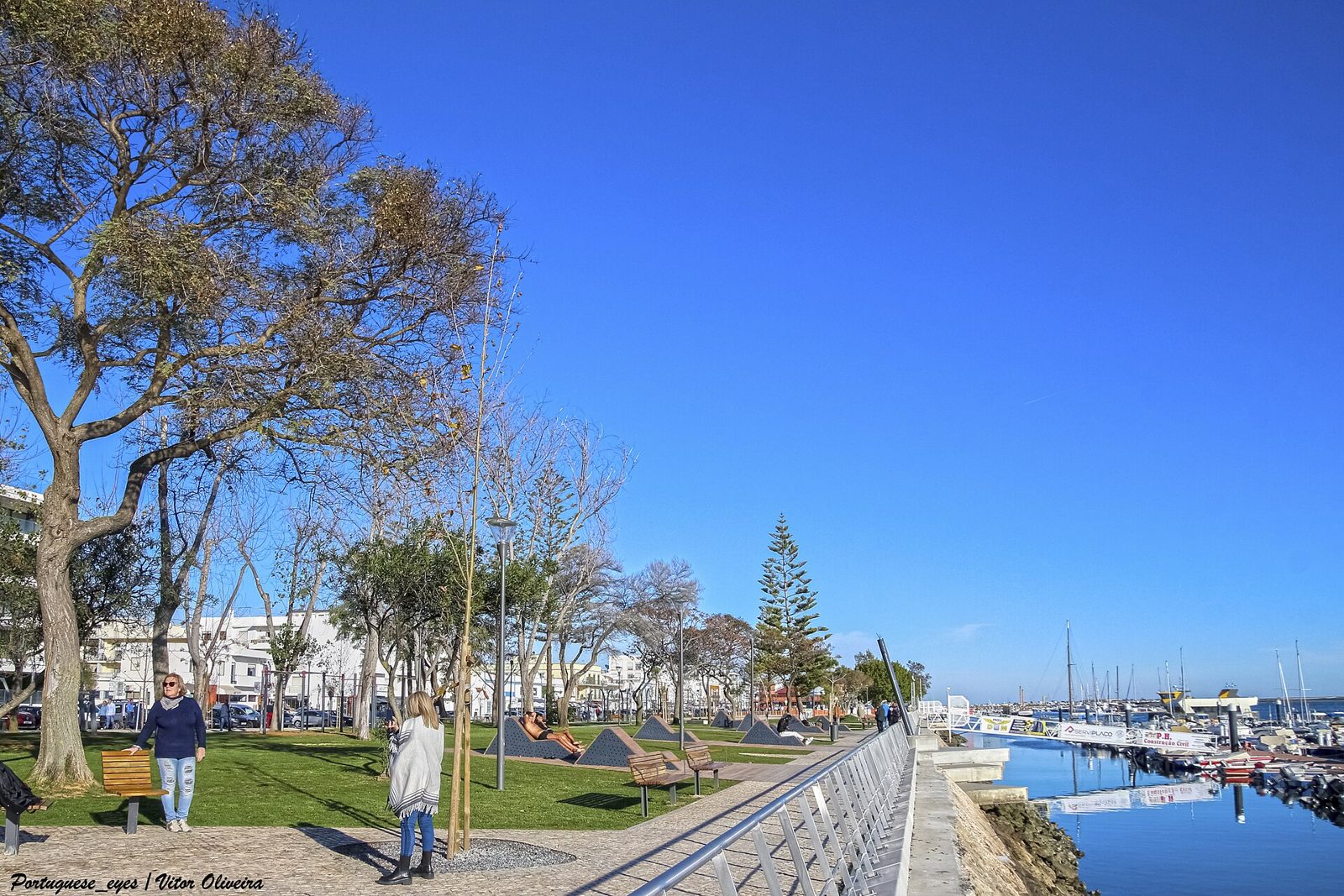
Published: · Cover photo: Vitor Oliveira, CC BY-SA 2.0
Olhão (often written Olhao) is the fishing capital of the Algarve, just 15 minutes from Faro. The town grew out of a fishermen's settlement on the Ria Formosa lagoon, and its old quarters still show it: white flat-roofed houses, narrow lanes, markets by the water and sculptures of local legends. The route below runs along the waterfront and through the old centre, and is about 1.5 km long.
Route at a glance
- Distance: about 1.5 km
- Time: 1–1.5 hours at an easy pace; 2.5–3 hours with the market and lunch
- Start: the waterfront by the Marina Ria Center shopping centre, Avenida 5 de Outubro — map
- Finish: the monument to Patrão Joaquim Lopes at the eastern end of the waterfront — map
- Entry: every stop on the route is free
What to see in Olhão
1. The waterfront and the travellers sculpture
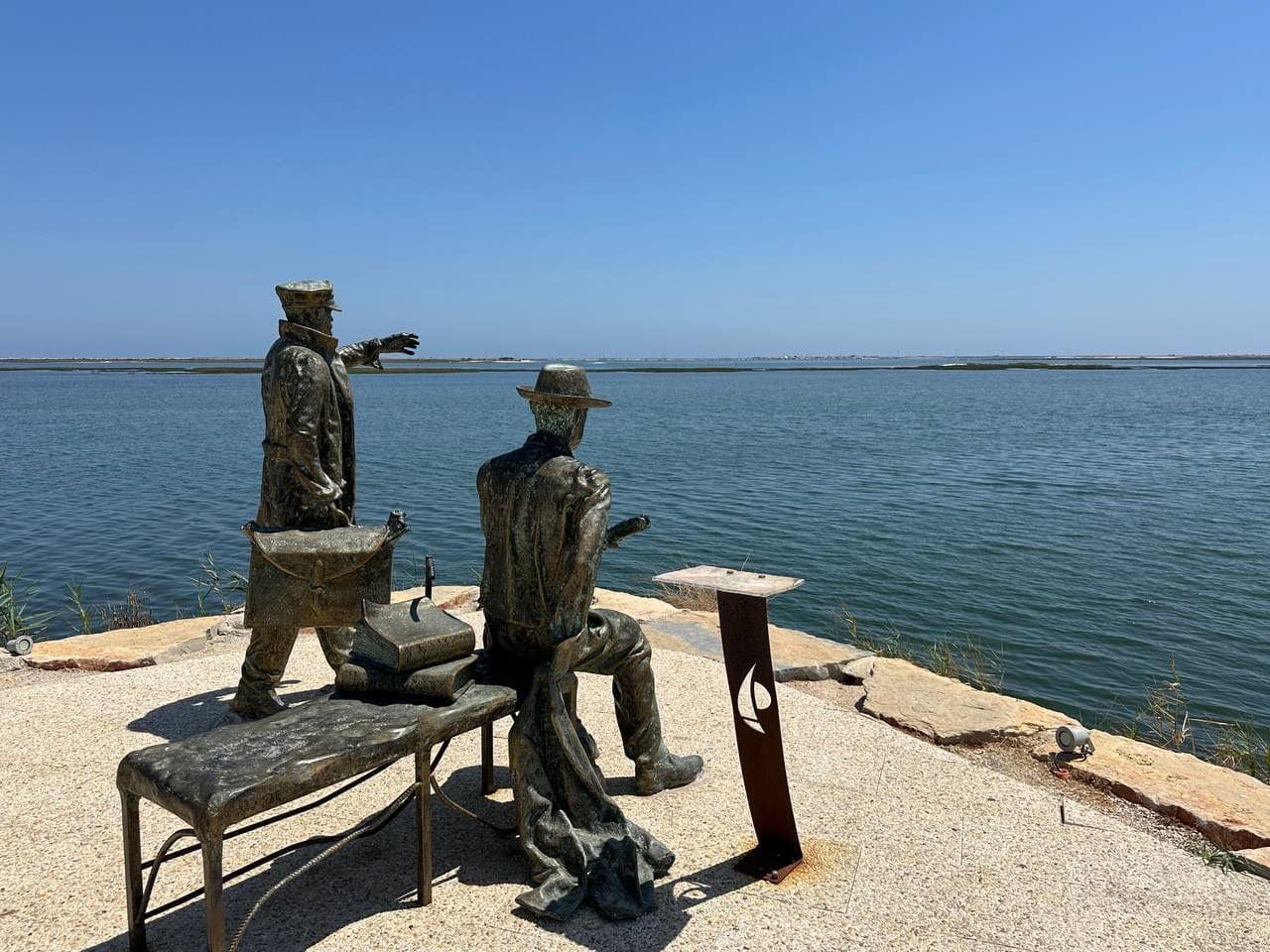
A good place to start is the viewpoint by the water near Marina Ria Center, where bronze travellers sit on a bench gazing over the lagoon. Where the smart promenade now runs there were once only fishermen's huts; the first stone houses went up from 1715, and the settlement gradually grew into a town. Nearby, a traditional fishing boat rests on the sand — boats like this once fed whole families.
2. Jardim do Pescador Olhanense and its azulejo panels
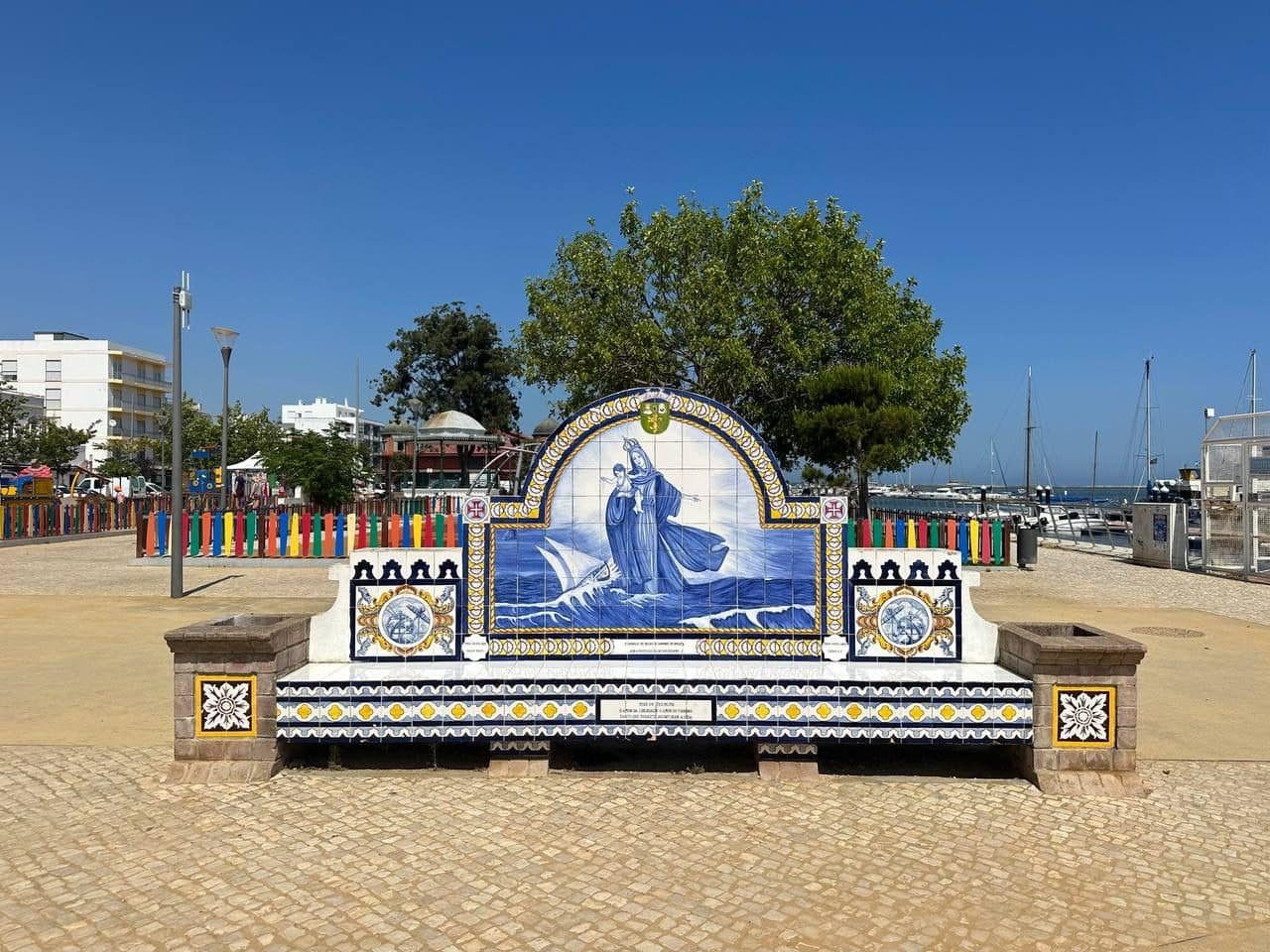
The "Olhão Fisherman" garden on the waterfront is known for its benches decorated with blue-and-white azulejo tiles. One panel tells the story of the town's proudest moment: in 1808 local fishermen sailed the small boat Bom Sucesso across the Atlantic to bring the Portuguese royal court in Rio de Janeiro news that Napoleon's troops had been driven out.
3. Barreta quarter and the "cubist town"
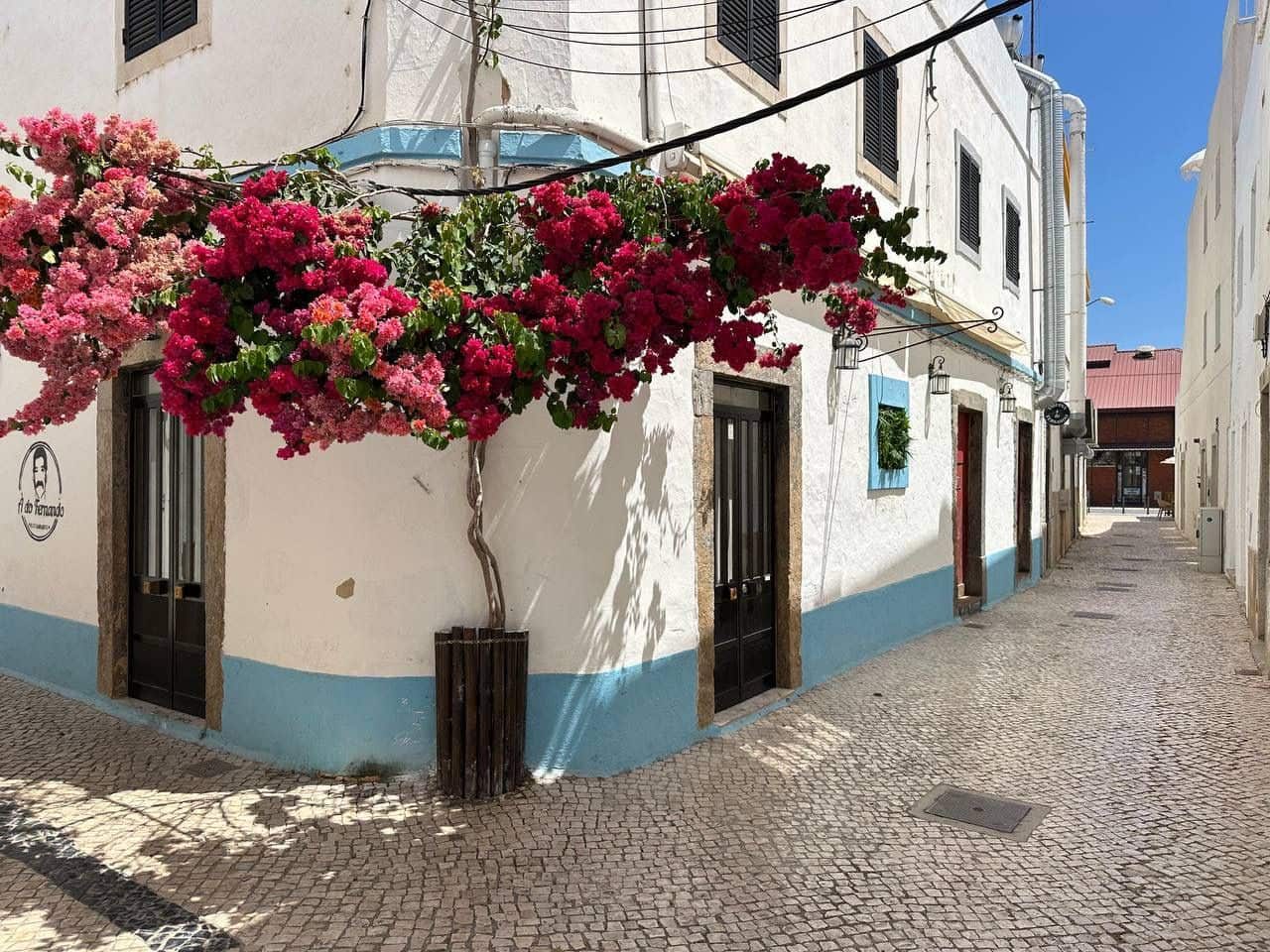
Barreta is Olhão's oldest fishing quarter. It still has white houses with flat roof terraces (açoteias) and little rooftop turrets that earned Olhão its nickname, the "cubist town". The lanes are narrow and winding — perfect for wandering with no particular plan, admiring doors, tiles and flowers on the façades.
4. The statue of Arraúl
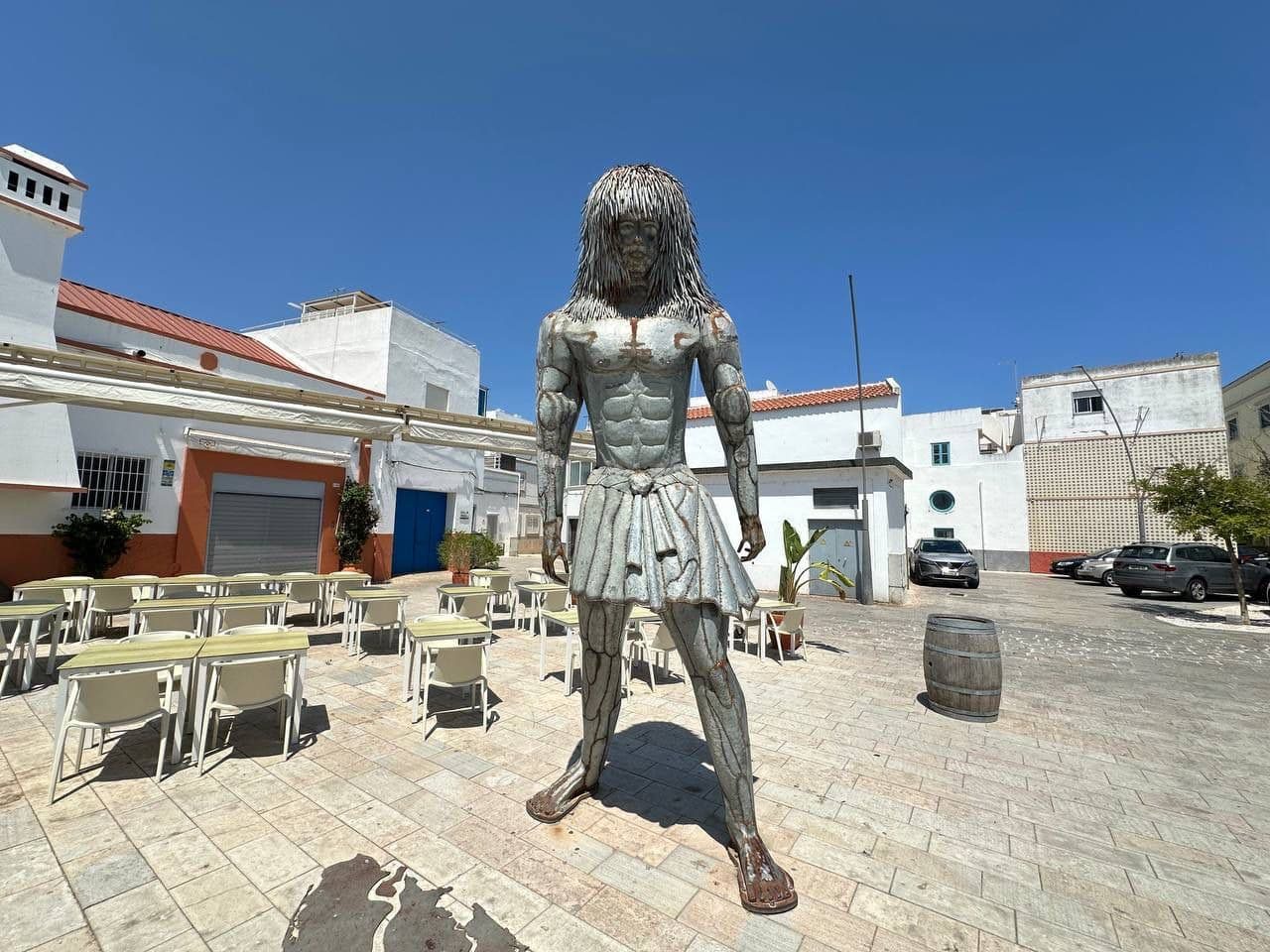
The first of the sculptures dedicated to local legends. Arraúl, so the story goes, was a son of Hercules who survived the fall of Atlantis: a huge wave swept him out to sea, a whale swallowed him, yet he escaped and washed up on the shore of what would become Olhão. The legend sculptures are dotted around the old centre, and spotting them is half the fun.
5. The legend of the enchanted Moor (Largo do Gaibéu)
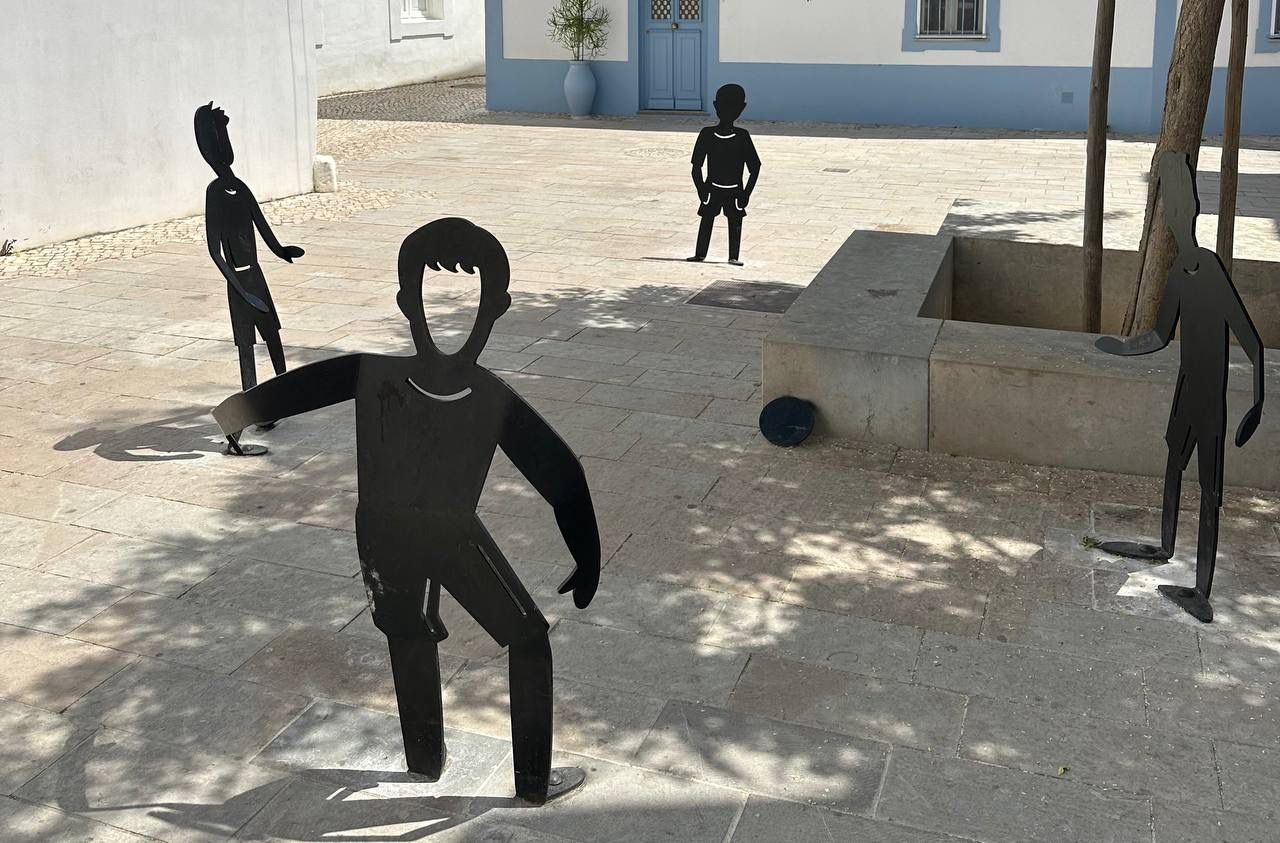
On the little square of Largo do Gaibéu stand black silhouettes of children at play. They illustrate a legend told by an old fisherman: as a boy he met a strange child who invited him to play, and together they flew off to the hidden golden palace of an enchanted Moor.
6. The statue of Floripes
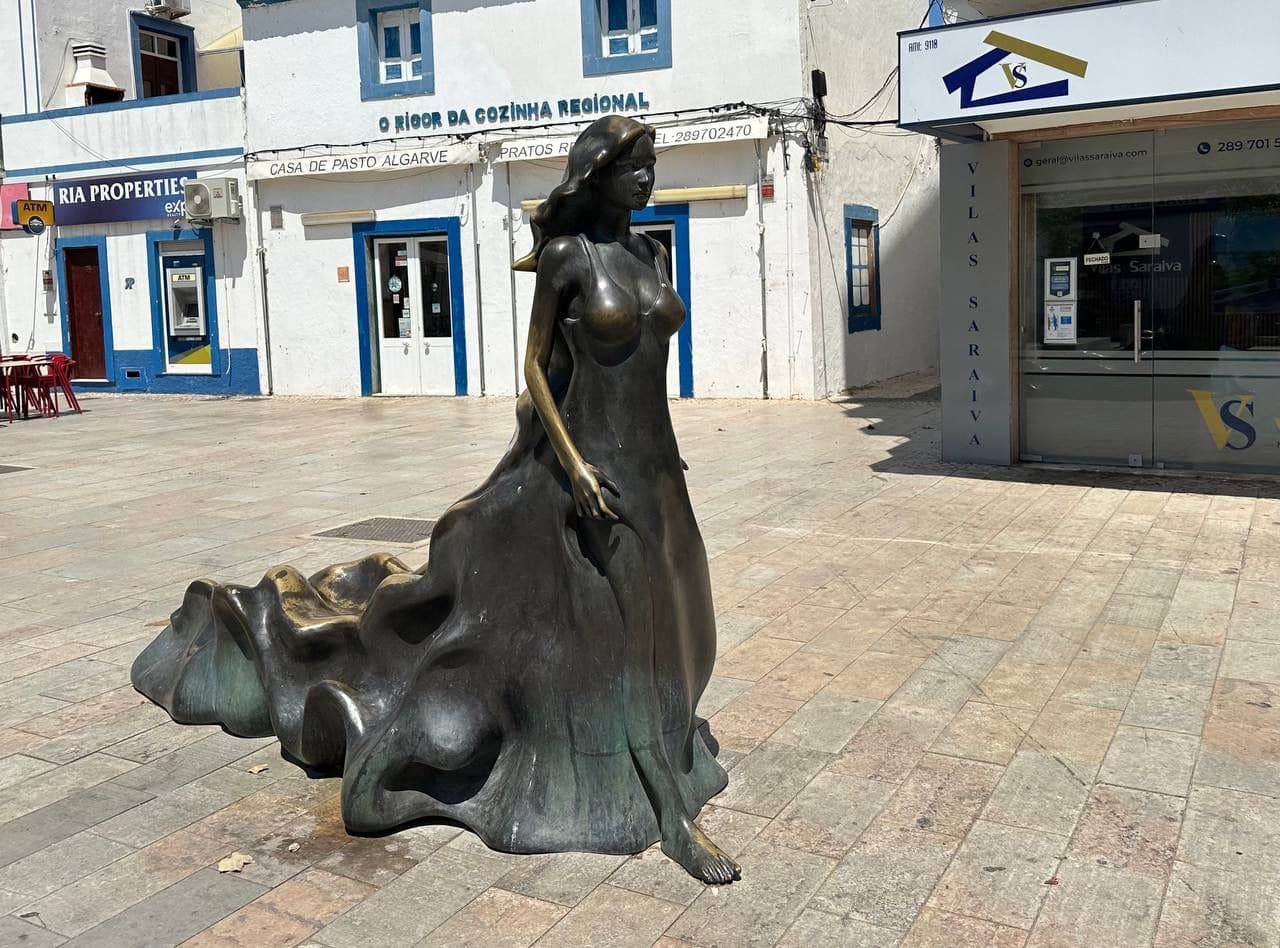
Olhão's best-known legend is that of the beautiful and mysterious Floripes, a Moor's daughter. She is said to have appeared after midnight, wandering through the town and along the shore, and no one dared approach her. The bronze Floripes in her billowing dress is one of the most photographed sculptures in town.
7. Olhão markets
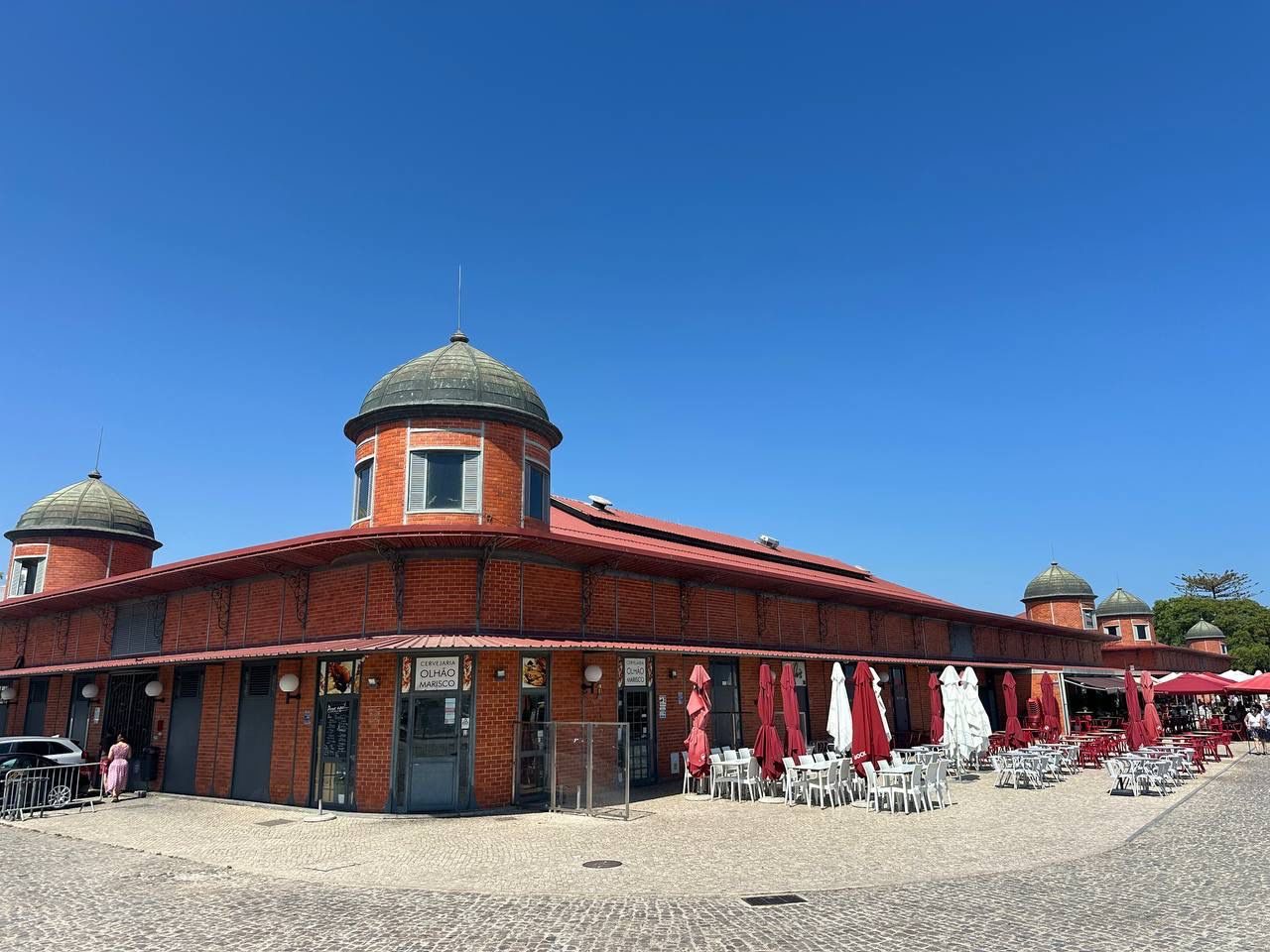
The two red-brick pavilions with domed towers are the town's best-known landmark. One sells fish and seafood, the other fruit, vegetables and local produce. The markets are busiest in the morning, and on Saturdays a large farmers' market sets up alongside. The surrounding restaurants serve the freshest fish in town — a great spot for lunch.
8. The legend of the magic spring
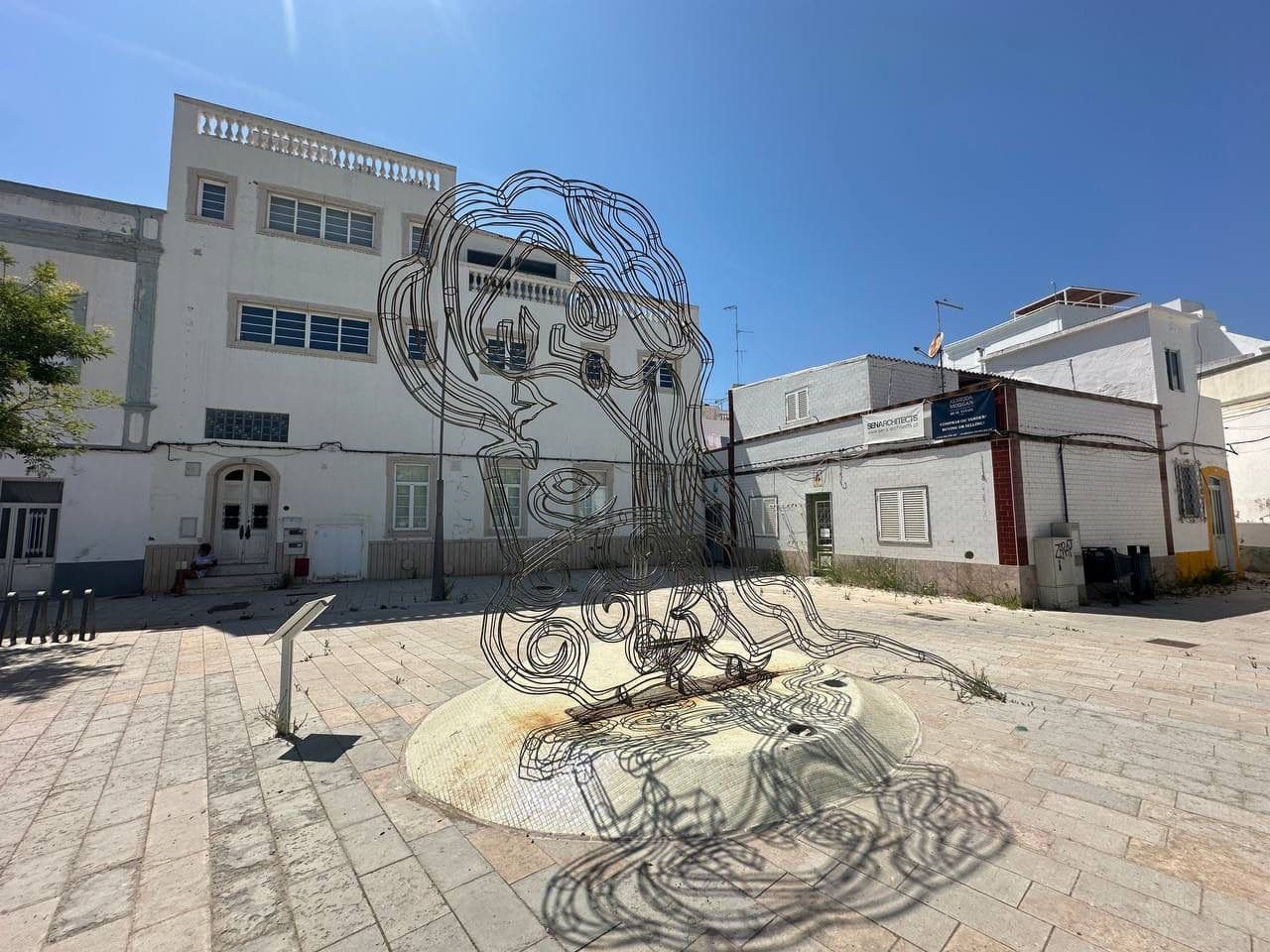
Another Moorish legend: an old Moor's daughter turned down every suitor until a young man won her heart with ballads beneath her window. Her father was not about to give up his treasure so easily, and the tale ends with a magic spring. The openwork metal sculpture stands on a square by the old factories.
9. Murals on the old canning factories
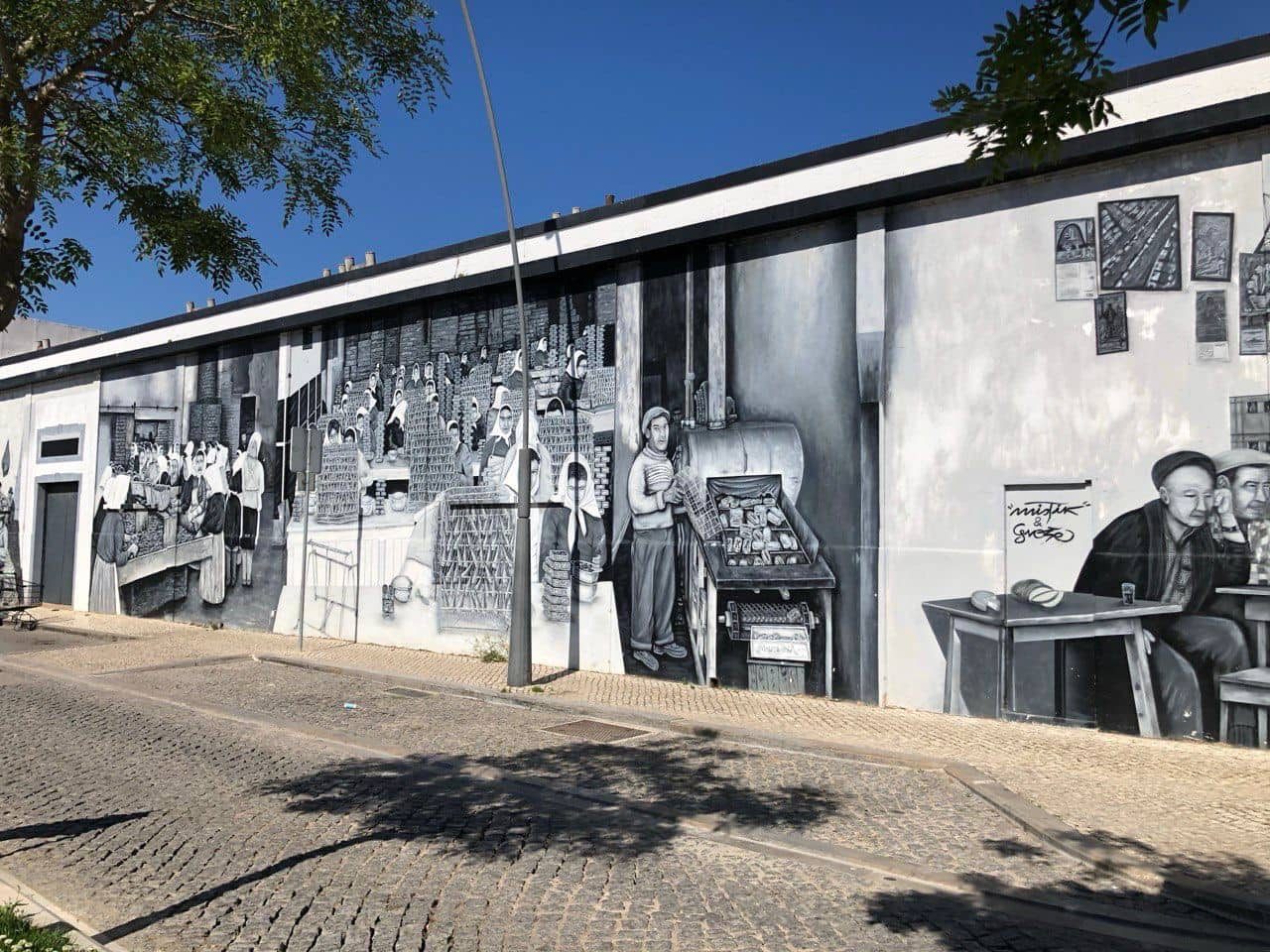
For a long time Olhão lived from its canning industry, with dozens of factories processing sardines and tuna. Today the walls of the former factory buildings are covered in large black-and-white murals of the lives of workers and fishermen.
10. Monument to Patrão Joaquim Lopes
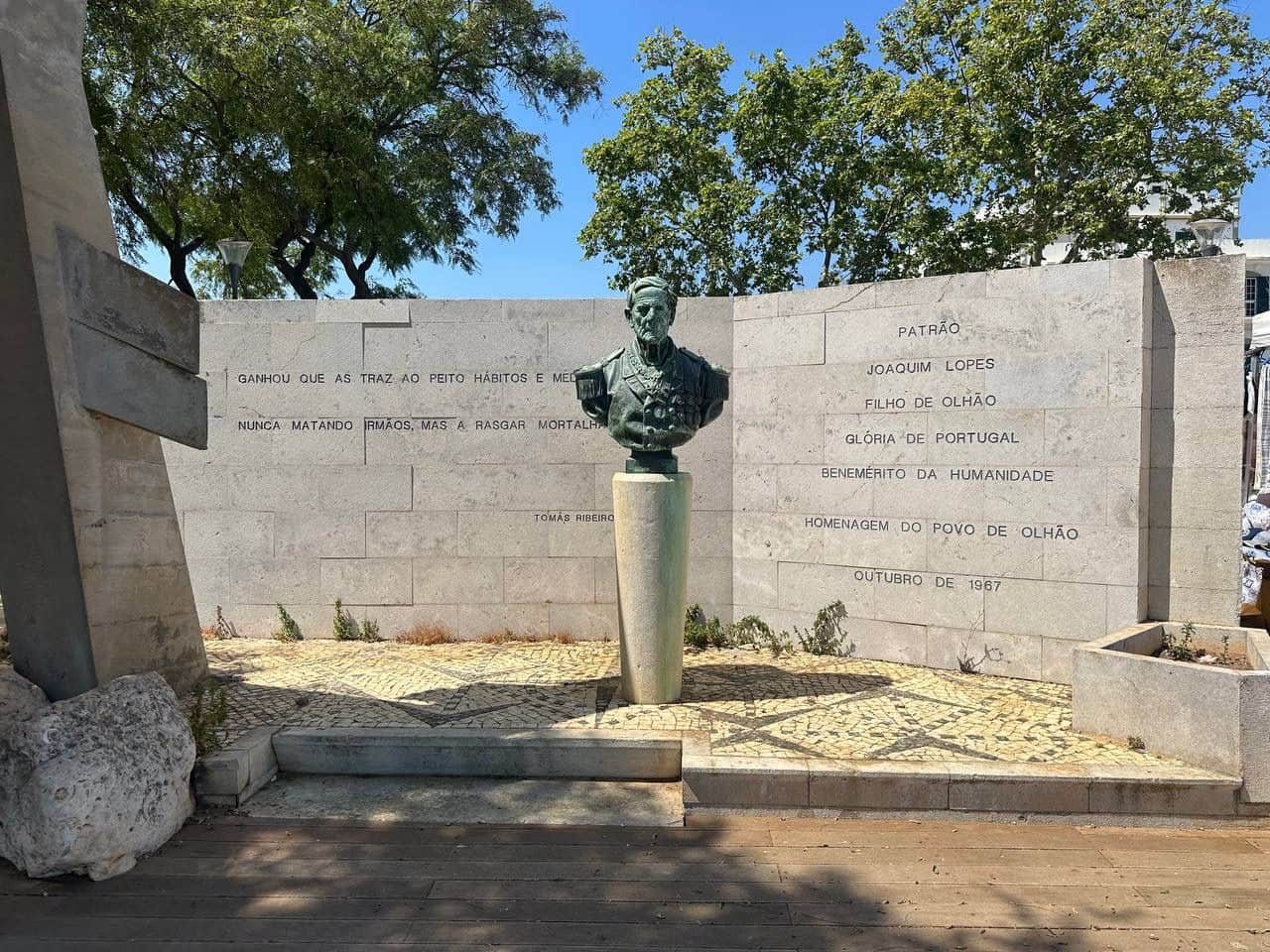
Joaquim Lopes was born in Olhão in 1798 and went to sea at the age of ten. He later led the lifeboat service at Paço de Arcos near Lisbon and pulled many people from the water, earning him the nickname "the man who conquered the sea". His monument stands at the eastern end of the waterfront, where the walk ends.
How long does it take?
Without long stops, 60–90 minutes. If you browse the market or have lunch on the waterfront, allow 2.5–3 hours.
Practical tips
- When to go. The market is at its liveliest in the morning, especially on Saturdays. Any daylight hours suit a stroll through the old quarters.
- Season. Olhão is a pleasant walk all year round.
- Accessibility. The historic centre has traditional cobbles and narrow lanes.
- Footwear. Comfortable walking shoes.
- In summer. Bring water and a hat.
FAQs
Where should I start a walk around Olhão?
On the waterfront by the Marina Ria Center shopping centre on Avenida 5 de Outubro — from there it's an easy walk along the water to the old centre and the markets.
Can I stop for lunch on the way?
Yes. There are plenty of restaurants serving fresh fish and seafood around the markets and along the waterfront.
Is Olhão easy to explore on foot?
Yes. The historic centre is compact and flat.
Is it suitable for children?
Yes. Children usually love hunting for the legend sculptures and hearing their stories.
Final thoughts
Olhão is quite different from neighbouring Faro: fewer monuments and more everyday life — markets, boats, washing on the balconies and a legend round every corner. Take the route slowly, stop at the market and leave time simply to wander the lanes of Barreta.
Want to hear more of Olhão's legends? The Legends of Olhão quest leads you to 13 locations with riddles and stories, all on your phone.
Read next: Faro Old Town walk